Liquidity Terms vs. Liquidity Reality: What Allocators Can Actually Expect Back
A fund's redemption terms describe the liquidity promised,but the portfolio determines the liquidity it can actually deliver. In digitalassets, the gap between the two is often wider than allocators assume, and itrarely shows up until everyone wants out at once.
Allocators redeem for three broad reasons: a scheduledrebalance, a manager who is underperforming, or a market stress event wherepreserving liquidity becomes the priority. The last is when stated terms andreal liquidity are most likely to diverge.
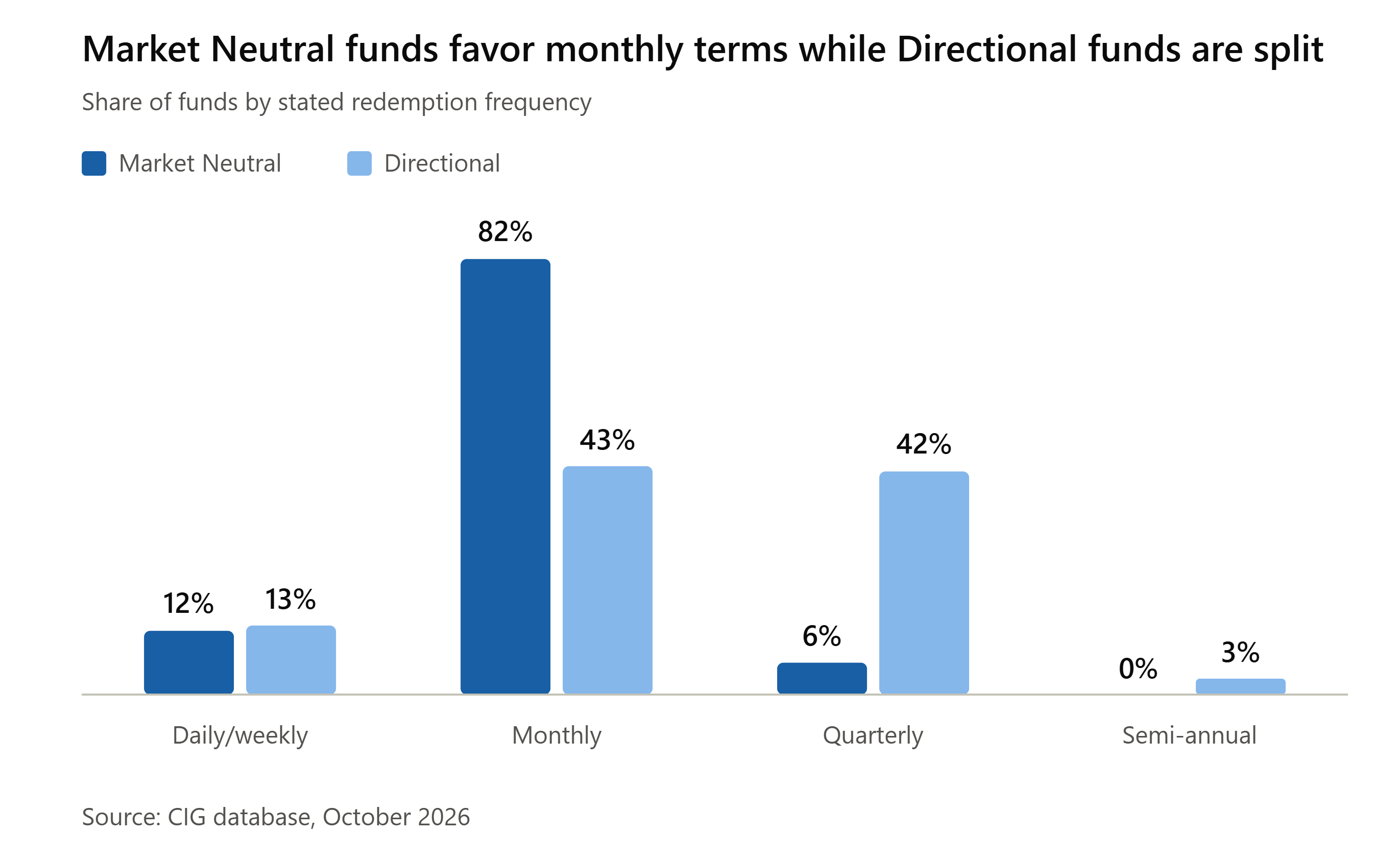
The standard terms across digital asset hedge funds are typically monthly redemptions with 30 days' notice. This includes funds holding locked tokens, venture-style positions and DeFi positions with exit queues. Ina calm market, the mismatch is invisible because redemptions can be met from the liquid sleeve. Under stress, redemptions may increase and the terms in the offering documents become the only thing that matters.
This piece looks at three places where that gap hides: the liquidity of the portfolio itself, differences in terms between investor classes, and the gate and suspension provisions in the PPM. None is a reason to avoid a manager on its own, but each must be evaluated to understand your exposure once you need your money back.
1. Portfolio liquidity vs. liquidity terms
When evaluating portfolio liquidity, the first question istypically how often a fund offers redemptions. However, the more importantquestion, is how much of the portfolio can be sold within that time framewithout a material discount. When those answers diverge, the investor's realredemption value is lower than the stated NAV, and payment takes longer thanthe documents imply.
For most strategies, the answer is reassuring. Long-onlydirectional books, stablecoin arbitrage and DEX liquidity provision cangenerally be unwound within days. The problems sit in the illiquid sleeve:locked tokens from OTC deals or SAFTs that cannot be sold before they unlockexcept at a secondary-market discount, venture equity and token warrants withno market at all, small-cap positions that are large relative to tradingvolume, and vault withdrawal queues that stretch in a crowded exit.
When redemptions exceed what the liquid sleeve can cover, the manager has a few choices, and each costs someone. Selling illiquid positions through secondary markets realizes a discount, which can easily run20% to 50% on locked tokens or thinly traded names. Paying initial redemptions from the liquid sleeve leaves the remaining investors holding a more concentrated, less liquid portfolio, effectively transferring value from those who stay to those who leave first. In a run, the most loyal investors can end up with the worst outcome. Paying in kind hands the illiquidity problem to the investor. Moving the assets into a side pocket defers the problem until a realization event that may be months or years away.
Timing matters as much as price. Thirty days' notice and amonthly dealing date already imply 30 to 60 days before a redemption isprocessed, and many funds hold back 5% to 10% until the annual audit, so thefinal payment can arrive six months or more after the request.
Investor concentration compounds the problem. If oneinvestor holds 30% to 40%, their redemption pulls out the most liquidpositions, disrupts active strategies and can prompt others to follow.Allocators should favor funds with a diversified investor base.
The liquidity ladder provides the most important information: the percentage of NAV that can be sold within one, three, seven,30 and 90 days, under normal and stressed volumes. Compare it with the redemption terms and the investor base. A fund where one LP holds 30% of capital and only half the book is liquid within a month has a problem today, even if no one has redeemed yet. Finally, ask whether a large redemption would be met with a pro rata slice of the portfolio or by selling the liquid positions first.

2. Redemption terms across share classes, founders and LPs
A fund's effective liquidity is set by its most liquidinvestor, not by the terms in your subscription documents. If another class, aside letter or a parallel account can exit faster than you, that investor getsfirst claim on the liquid sleeve in a stress event. You inherit whatever isleft.
Tiered share classes are common and often reasonable. Afounders class with preferable fees might sit alongside institutional andstandard classes at higher fees. Fee differences affect each investor's netreturns but not anyone's exit, and an early class that trades lower fees for a12-month lock is a fair bargain. The issue is that every class shares the sameportfolio, so a monthly class can drain liquid assets before a quarterly classreaches its first redemption date.
In some extreme cases, founders and employee share classesrequire only 10 or 20 days' notice against 30 for everyone else, and is exemptfrom a 25% gate. Insiders get out in full and ahead of outside LPs, meaning thepeople with the best information about the portfolio would have the fastestexit. That is a governance problem regardless of whether anyone acts on it.
Separately managed accounts running the same strategy alsopose a particular concern in digital assets: an SMA holder can often withdrawwithin hours while fund investors wait for the next redemption date.
Allocators should map every route out of the portfolio, notjust their own. Ask for a summary of all share classes, side letters grantingpreferential liquidity, parallel vehicles or SMAs trading the same book, andthe terms on the GP commitment, including whether insiders give the same noticeas LPs and whether their redemptions are disclosed. Then test the liquidityladder against the shortest term in the structure, not the one you wereoffered.
Different fee terms are perfectly acceptable. Differentredemption terms that leave outside investors bearing the brunt of a stressevent should be negotiated away, through a side letter if necessary, beforecommitting capital.
3. Gates and suspensions: what the PPM permits vs. what is standard
Almost every PPM gives the manager or the fund's directorsbroad power to gate, suspend or side pocket. The drafting is deliberately wideto preserve flexibility in the case of stress events. What matters is how thosepowers are triggered, how long they can last, and what investors are owed whilethey are in force.
A fund-level gate caps total redemptions on any redemptiondate, with excess requests scaled back pro rata. An investor-level gate limitshow much of a single holding can be redeemed per period, for example 25% perredemption date. Suspension halts redemptions entirely, and side pockets carveilliquid assets out until they can be realized. Some managers say the fund hasno gate while the PPM lets them suspend or extend redemptions at theirdiscretion. An investor who believes they can always exit may find in a stressperiod that they cannot.
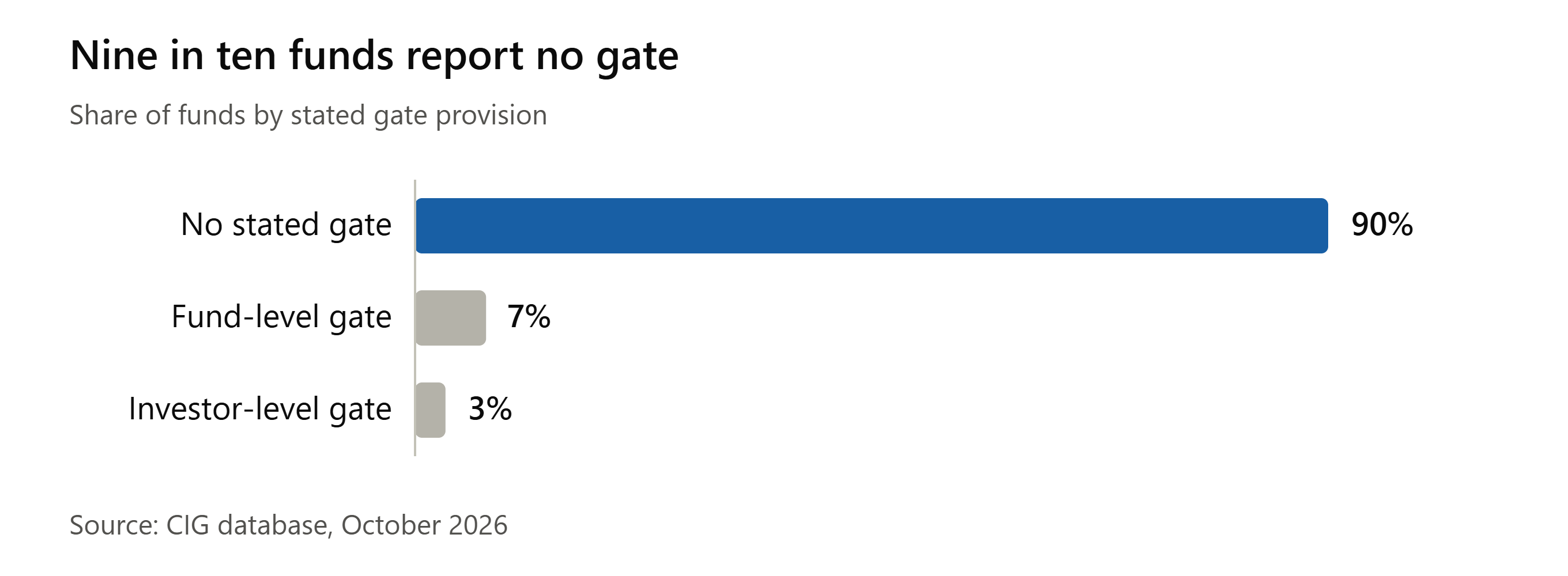
A stated absence of a gate says nothing about suspensionrights, which sit elsewhere in the PPM. Side pockets are also more common thanmany allocators expect: 35% of the funds that report on them permit sidepockets.
The gap between what is permitted and what is standard liesin the details. Suspension triggers in many digital asset fund PPMs extend toany circumstance the directors consider appropriate, and few documents set amaximum duration. Some are silent on whether gated amounts carry forward withpriority. Management fees often keep accruing during a suspension, and somefunds can charge performance fees on side pocket valuations before anything isrealized.
A gate is not automatically bad for investors. Forcedselling of impaired or illiquid assets transfers value from those who stay tothose who leave first. A well-set gate, one the fund can meet while stillrunning its strategies, stops an investor holding 30% of the fund from pullingeverything in one window and lets the manager rebalance on its own timeline.The FTX collapse is the clearest digital asset example: funds that sidepocketed their claims instead of selling at late-2022 discounts held an assetthe estate later repaid in full plus interest, though at November 2022 prices.
The distinction allocators must draw is between a gate thatbuys time for an orderly exit and one that masks a valuation or solvencyproblem. Warning signs include accepting new subscriptions while redemptionsare gated, insiders redeeming ahead of a suspension and irregularcommunication. Do not subscribe to a fund that is gating without a clearexplanation, because new capital can end up funding insider exits.
Before investing, allocators must read the provisionsthemselves, not the term sheet summary. Check whether triggers are defined,whether there is a time limit, whether gated requests get priority, whetherfees are reduced during a suspension and whether the GP's own capital faces thesame restrictions.
Underwriting Liquidity
Liquidity terms are a promise, and the portfolio is thecollateral behind it. Allocators who check only the stated redemption frequencyare underwriting the promise without examining the underlying. The work is notcomplicated: examine the liquidity ladder, map every route out of theportfolio, and read the gate and suspension language as written.
The managers worth backing will welcome these questions.They can show how the book would be liquidated, treat all investors the same ina stress event, and keep discretion in their documents limited to clearlydefined circumstances. When they do extend or pause redemptions, they say sopromptly and explain why, with enough detail for investors to judge thedecision. Managers who avoid clarity on what they hold or what their terms meanare best avoided. The time to find out is before you need your capital back.
Conclusion
For allocators, the critical question is not how frequently a fund offers redemptions, but whether those terms can be honored when liquidity is most needed. The answer depends on the underlying portfolio, the rights of other investors, and the discretion managers retain to restrict withdrawals.
These considerations should inform both manager selection and position sizing. A fund offering quarterly liquidity with a transparent portfolio and well-defined redemption protections may present less liquidity risk than one offering monthly redemptions against a portfolio of locked or difficult-to-sell assets. Ultimately, allocators should assess liquidity under stressed conditions rather than relying on stated terms alone.
Contact us to learn more about ways Crypto Insights Group can support your digital assets program.